Industry Information
Home > News > Industry Information > Sodium Hyaluronate in Skincare: Molecular Weight, Hydration, and Formulation Applications
Nov. 10, 2026
Hydration is one of the most important functions of modern skincare formulations, and sodium hyaluronate has become a widely used ingredient in products designed to maintain skin moisture and improve skin feel. As the sodium salt of hyaluronic acid, it is valued for its strong water-binding properties and compatibility with a variety of water-based cosmetic systems. However, not all sodium hyaluronate ingredients perform in exactly the same way. Molecular weight, concentration, and formulation design all influence the final product. Understanding these factors helps cosmetic formulators make better decisions when developing moisturizing products and comparing different humectant options.
Sodium hyaluronate is the sodium salt of hyaluronic acid, a naturally occurring glycosaminoglycan found in connective tissues, including the skin. Its molecular structure consists of repeating disaccharide units containing D-glucuronic acid and N-acetyl-D-glucosamine. The structure contains numerous hydrophilic groups, allowing the ingredient to bind and retain significant amounts of water.
In cosmetic formulations, sodium hyaluronate is primarily used as a humectant, moisturizing agent, and film-forming ingredient. It helps maintain moisture on the skin surface and contributes to a smoother, more hydrated skin feel.
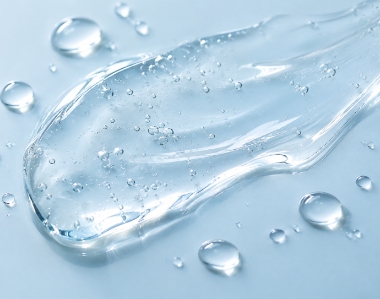
Compared with some conventional moisturizing ingredients, sodium hyaluronate offers an additional formulation advantage: it is available in different molecular weight grades. These grades can produce different viscosity profiles, film characteristics, hydration experiences, and formulation behaviors.
Its versatility makes it suitable for a range of skincare products, including facial serums, moisturizing creams, lotions, gels, facial masks, and other leave-on formulations.
The moisturizing function of sodium hyaluronate is closely related to its ability to attract and retain water. When incorporated into a water-based skincare formulation, it helps create a hydrated environment and can form a thin film after application.
On the skin surface, this film helps retain moisture and contributes to a smoother appearance. The resulting hydration effect can improve skin softness and reduce the feeling of dryness associated with insufficient surface moisture.
Its performance is influenced by several factors:
Molecular weight: Different molecular sizes influence viscosity, film formation, and skin interaction.
Concentration: The amount used affects the viscosity, texture, and sensory properties of the finished product.
Formulation system: Other humectants, emollients, and polymers can influence overall moisture retention and application feel.
Environmental conditions: Humidity and the overall moisturizing system affect the performance experienced during product use.
For this reason, sodium hyaluronate should not be evaluated only by its water-binding capacity. The final hydration experience depends on how the ingredient works within the complete formulation.
Molecular weight is one of the most important factors when selecting sodium hyaluronate for skincare applications. Commercial grades may include high, medium, and low molecular weight materials, as well as hydrolyzed forms. These categories are not defined by one universal boundary, so formulators should always check the actual molecular weight range provided in the supplier specification.
High molecular weight sodium hyaluronate generally has a stronger film-forming effect and contributes to surface hydration. Because of its larger molecular size, it has limited penetration through the outer skin barrier and primarily works at the skin surface.
In cosmetic formulations, high molecular weight grades can increase viscosity and create a smooth, hydrated film. They are commonly considered for moisturizing gels, facial serums, creams, and lotions where surface hydration and texture are important.
One formulation consideration is that higher molecular weight grades may dissolve more slowly and produce greater viscosity. Proper dispersion and hydration time are therefore important during processing.
Low molecular weight sodium hyaluronate consists of smaller polymer chains and generally has different physical and skin-interaction characteristics from high molecular weight grades. Penetration is not determined by molecular weight alone
However, penetration is not determined by molecular weight alone. The actual molecular weight distribution, formulation vehicle, concentration, and testing method all influence the results. A low molecular weight designation should therefore not automatically be interpreted as proof of delivery into deeper skin layers.
From a formulation perspective, lower molecular weight grades may offer lower viscosity and different sensory characteristics, making them useful when developers want to balance hydration with a lighter product texture.
Some skincare formulations combine different molecular weight grades to achieve multiple hydration characteristics. A higher molecular weight grade can contribute to surface film formation, while a lower molecular weight grade offers a different hydration and formulation profile.
This approach is often used in multi-weight hyaluronic acid serums and premium moisturizing products. The objective is not simply to include more types of hyaluronic acid, but to develop a balanced formula with suitable viscosity, spreadability, hydration, and skin feel.
| Type | Main Characteristics | Typical Formulation Applications | Selection Consideration |
|---|---|---|---|
| High Molecular Weight | Strong film formation and higher viscosity | Moisturizing creams, gels, serums | Suitable for surface hydration and a smooth skin feel |
| Medium Molecular Weight | Balanced viscosity and hydration properties | Lotions, facial serums, moisturizing gels | Useful when balancing texture and moisture retention |
| Low Molecular Weight | Lower viscosity and different skin interaction characteristics | Lightweight serums and multi-weight formulations | Evaluate molecular weight distribution and finished-product performance |
| Hydrolyzed Hyaluronic Acid | Shorter molecular chains produced through hydrolysis | Specialized moisturizing and skincare formulations | Check the specific grade, molecular weight, and stability profile |
Different skincare products have different texture, viscosity, and hydration requirements. Sodium hyaluronate can be incorporated into several product categories, but the appropriate molecular weight and formulation level should be selected according to the intended product performance.
Facial serums are among the most common applications of sodium hyaluronate. Their lightweight textures and relatively high water content make them suitable for incorporating water-binding ingredients.
In these formulations, sodium hyaluronate helps provide a hydrated skin feel and can contribute to a smooth, slightly gel-like texture. Multi-weight combinations may also be considered when developers want to balance surface film formation with a lighter sensory profile.
In creams and lotions, sodium hyaluronate works alongside emollients, oils, and emulsifiers. While it helps attract and retain water, the oil phase and other conditioning ingredients contribute to softness, spreadability, and reduced moisture loss.
The balance between these components is important. Excessive polymer content may create a sticky or heavy feel, while insufficient emollient support may limit the overall moisturizing experience. Formulators should consider the complete emollient system rather than evaluating the humectant in isolation.
Sodium hyaluronate is also used in water-based gels and facial masks. Its water-binding and viscosity-modifying properties can help create a hydrated texture and improve the application experience.
For gel formulations, the molecular weight and concentration should be selected carefully to achieve the desired consistency. A high-viscosity system may provide a richer gel texture, while a lower-viscosity system may be more appropriate for lightweight products and sprayable formulations.
Sodium hyaluronate is an effective ingredient for hydration-focused formulations, but it is not the only option available to cosmetic developers. Glycerin, propanediol, butylene glycol, and D-panthenol are also widely used in moisturizing products.
These ingredients have different chemical structures and formulation functions. Rather than replacing one another, they are often selected to complement different parts of a moisturizing system.
| Ingredient | Primary Function | Formulation Characteristics | Common Applications |
|---|---|---|---|
| Sodium Hyaluronate | Water binding and film formation | Available in different molecular weight grades; can modify viscosity | Serums, creams, gels, masks |
| Glycerin | Humectancy | Water-soluble, versatile, and cost-effective | Lotions, creams, cleansers |
| Propanediol | Humectancy and solvent support | Helps adjust formulation feel and ingredient solubility | Serums, lotions, cleansers |
| D-Panthenol | Moisturizing and skin-conditioning support | Provides complementary conditioning properties | Serums, creams, lotions, skin and hair care products |
For example, glycerin is often selected as a dependable base humectant, while sodium hyaluronate can provide additional film-forming and sensory benefits. Their differences are also relevant when comparing glycerin and sodium hyaluronate in different cosmetic systems.
D-Panthenol can also be incorporated into moisturizing formulations to complement the hydration system with additional skin-conditioning properties. Its role in different product formats is discussed in TJCY's article on D-Panthenol in Skin and Hair Care Formulations.
Although sodium hyaluronate is widely used in water-based skincare products, its incorporation requires attention to dispersion, hydration, and compatibility. Incorrect processing can lead to clumping, uneven viscosity, or inconsistent product texture.
Sodium hyaluronate is water-soluble but can dissolve slowly, particularly in higher molecular weight grades. Adding the powder too quickly to water may cause surface hydration and lump formation, making complete dissolution more difficult.
One common approach is to gradually disperse the powder into the aqueous phase under suitable agitation. Pre-wetting the material with glycerin or another compatible polyol may also help improve dispersion before adding water.
The required mixing speed and hydration time depend on the selected grade and equipment. Formulators should follow the supplier's technical guidance and confirm that the material is fully hydrated before evaluating the final viscosity.
The stability and viscosity of sodium hyaluronate can be influenced by the surrounding formulation environment. Extreme pH conditions, elevated temperatures, and certain electrolyte systems may affect polymer stability or solution behavior.
When developing a new product, formulators should test sodium hyaluronate in the complete formulation rather than relying only on its performance in purified water. Compatibility with preservatives, surfactants, salts, and other active ingredients should be evaluated during stability testing.
Increasing the concentration of sodium hyaluronate can increase viscosity and the perception of a hydrated film, but a higher use level does not necessarily produce a better skincare product.
Excessive viscosity or film formation may affect spreadability, absorption perception, and the after-feel. The appropriate concentration should therefore be established through formulation trials, taking into account molecular weight, product type, and the desired sensory profile.
Selecting sodium hyaluronate should begin with the intended product rather than simply choosing the highest molecular weight or the most expensive grade. A suitable selection process considers the following factors:
Application type: Determine whether the ingredient will be used in a serum, cream, lotion, gel, or facial mask.
Molecular weight: Match the grade to the required viscosity, film formation, and hydration characteristics.
Appearance and solubility: Confirm that the material is suitable for the intended formulation process.
Specification: Review molecular weight range, assay or content, moisture, appearance, and relevant quality parameters.
Compatibility: Test the material with other humectants, polymers, preservatives, and formulation components.
Stability: Evaluate viscosity, appearance, pH, and overall product stability under the intended storage conditions.
For cosmetic manufacturers, the goal is to select a grade that performs consistently within the finished product. Comparing supplier specifications and conducting small-scale formulation trials can help identify the most appropriate material before production is scaled up.
Sodium hyaluronate is a versatile moisturizing ingredient used across a wide range of skincare formulations. Its water-binding properties, film-forming characteristics, and availability in different molecular weight grades make it suitable for products ranging from lightweight facial serums to moisturizing creams and gels.
For formulators, molecular weight is an important starting point, but it should be evaluated together with concentration, processing conditions, compatibility, and the sensory requirements of the finished product. Combining sodium hyaluronate with other moisturizing ingredients can also help create a more balanced formulation.
As demand for functional moisturizing ingredients continues to influence skincare development, understanding the properties and applications of sodium hyaluronate can help manufacturers make more informed formulation decisions. Buyers and formulators looking for a broader selection of personal care ingredients can also explore TJCY's ingredient portfolio for their product development needs.
Palmitoyl Tripeptide-8 in Sensitive Skin Care: Functions and Formulation Applications
Piroctone Olamine in Anti-Dandruff Shampoo: Functions and Formulation Applications
Sodium Hyaluronate in Skincare: Molecular Weight, Hydration, and Formulation Applications
Ensifentrine API: Market Growth, Dual PDE3/4 Inhibition and COPD Drug Development

Tianjin Chengyi International Trading Co., Ltd.
8th floor 5th Building of North America N1 Cultural and Creative Area,No. 95 South Sports Road, Xiaodian District, Taiyuan, Shanxi, China.
+86 351 828 1248 /
Navigation
