Industry Information
Home > News > Industry Information > Piroctone Olamine in Anti-Dandruff Shampoo: Functions and Formulation Applications
Nov. 18, 2026
Developing an effective anti-dandruff shampoo involves more than choosing a cleansing agent. Formulators also need to consider scalp microorganisms, active ingredient solubility, surfactant compatibility, and the stability of the finished product. Piroctone olamine is a widely used cosmetic ingredient in this category, valued for its antifungal activity against dandruff-associated microorganisms, particularly Malassezia species. It is commonly incorporated into shampoos and other scalp-care products where dandruff control is an important formulation objective. Understanding its properties and application requirements helps manufacturers select suitable ingredients from a broader range of personal care ingredients.
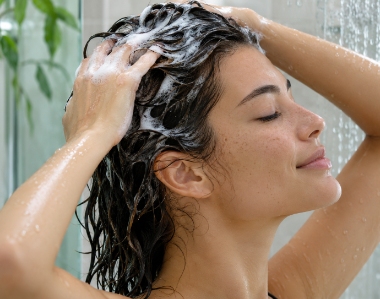
Dandruff is associated with several interacting factors, including scalp sebum, individual skin sensitivity, and the activity of microorganisms living on the scalp. Among these microorganisms, Malassezia yeasts are particularly relevant to dandruff development.
Malassezia species use lipids present on the scalp as part of their growth environment. Their metabolic activity can produce fatty acids and other substances that contribute to scalp irritation and increased shedding of skin cells. When this process becomes unbalanced, visible flakes and discomfort may occur.
Piroctone olamine helps address this issue through its antifungal activity. As a hydroxypyridone compound, it has a different chemical structure and mode of action from several traditional antifungal ingredients.
One of the main reasons piroctone olamine is used in anti-dandruff shampoo is its activity against Malassezia species. By controlling the growth of these dandruff-associated yeasts, it helps reduce one of the important microbial factors involved in visible scalp flaking.
This makes it particularly relevant to shampoos designed for regular scalp cleansing and dandruff management. Its function complements the cleansing action of surfactants, which remove excess oil and residues from the scalp and hair.
Research on hydroxypyridone antifungal compounds describes metal-ion chelation as an important part of their mechanism. Piroctone olamine can bind polyvalent metal ions, including iron, which may interfere with metal-dependent enzymes and essential cellular processes in fungal organisms.
This mechanism distinguishes piroctone olamine from azole-based ingredients, which generally act by interfering with fungal ergosterol biosynthesis. The difference in their chemical structures and mechanisms is relevant when formulators evaluate alternative or complementary anti-dandruff actives.
In practical cosmetic development, the choice of active ingredient should still be based on the target product, desired performance, applicable regulations, and finished-formula testing.
Shampoo is one of the most common applications for piroctone olamine because it combines scalp cleansing with the delivery of an anti-dandruff active. The ingredient provides several useful formulation characteristics beyond its primary antifungal function.
The main purpose of incorporating piroctone olamine into shampoo is to help control dandruff-associated microorganisms. This allows manufacturers to develop formulations that address both scalp cleansing and microbial factors related to flaking.
Unlike products designed only to remove loose flakes, anti-dandruff shampoos containing piroctone olamine are formulated to address an underlying contributor to recurring dandruff. The final performance depends on active concentration, formulation stability, application frequency, and the overall product design.
Piroctone olamine can be incorporated into different aqueous surfactant systems, making it suitable for various shampoo concepts. It can be considered in formulations using anionic, amphoteric, or nonionic surfactants, although compatibility and solubilization should be evaluated for each specific combination.
For example, anionic surfactants can provide the primary cleansing and foaming performance, while amphoteric and nonionic ingredients can help adjust foam texture, mildness, and formulation flexibility. The active ingredient must work within this complete system rather than being evaluated independently.
In some surfactant systems, piroctone olamine may also influence the viscosity of the finished product. This characteristic can be useful during shampoo development, particularly when formulators are adjusting consistency and the amount of additional thickener required.
However, this effect is formulation-dependent. The resulting viscosity should be measured after the active ingredient has been incorporated and the complete formula has reached equilibrium.
One of the main technical considerations when using piroctone olamine is its relatively low solubility in water. Simply adding the powder directly into an aqueous shampoo base may result in incomplete dissolution or uneven distribution. Formulation developers therefore need to consider the solvent system, surfactant composition, and addition sequence.
Piroctone olamine has limited solubility in pure water and many oil-based materials. It is generally more compatible with certain alcohols, glycols, and aqueous surfactant systems. Its solubility can also vary with the pH of the surrounding formulation.
For this reason, formulators commonly evaluate a suitable premix or solubilization approach before adding the ingredient to the main shampoo batch. Depending on the raw material grade and formulation design, ethanol, propylene glycol, or an appropriate surfactant phase may be considered.
The following factors should be evaluated during development:
Solvent selection: Confirm that the selected solvent can support the required active concentration.
Addition sequence: Evaluate whether a premix provides better dispersion and incorporation than direct powder addition.
Surfactant compatibility: Check whether the active remains properly incorporated in the complete cleansing system.
pH conditions: Assess how pH adjustment influences solubility and finished-product stability.
Storage stability: Observe whether precipitation, crystallization, or changes in appearance occur during storage.
The pH of a shampoo can influence the solubility behavior of piroctone olamine. Formulators should therefore establish a suitable pH range based on the specific grade, solvent system, and intended application rather than relying on a universal value.
Processing temperature and mixing conditions also deserve attention. Excessive or prolonged heating may affect the stability of some formulation components. The recommended processing conditions should follow the raw material supplier's technical guidance and be verified through stability testing.
Another important consideration is the interaction between piroctone olamine and certain metal ions. Technical formulation information indicates that iron and copper ions may form colored complexes with the ingredient, potentially affecting the appearance of the finished shampoo.
For manufacturers developing clear or lightly colored shampoo products, the quality of process water, raw materials, and production equipment should be considered. Monitoring metal contamination and evaluating the complete formula can help reduce unwanted color changes.
Piroctone olamine is only one component of an anti-dandruff shampoo. The cleansing base, conditioning ingredients, viscosity modifiers, preservatives, and other supporting materials all contribute to the final product experience.
| Ingredient Category | Main Function | Role in Shampoo Formulation |
|---|---|---|
| Piroctone Olamine | Anti-dandruff active | Helps control dandruff-associated microorganisms |
| Anionic Surfactants | Cleansing and foaming | Remove sebum, dirt, and product residue |
| Amphoteric Surfactants | Foam and mildness support | Help balance cleansing performance and sensory properties |
| Conditioning Agents | Hair conditioning | Improve softness, manageability, and combing properties |
| Thickeners | Viscosity adjustment | Help achieve the desired consistency and product texture |
| Preservatives | Microbiological protection | Protect the finished cosmetic product during storage and use |
A balanced surfactant base is particularly important. A shampoo designed for frequent use may require a different cleansing and conditioning balance from a deep-cleansing product. Formulators can evaluate different ingredient combinations when developing a mild cleansing system that supports both scalp cleansing and product feel.
Conditioning ingredients can also improve the experience after washing. For example, D-Panthenol is used in various hair-care formulations to support moisture feel and hair conditioning. It can complement an anti-dandruff shampoo, although it does not replace the function of the anti-dandruff active itself. More details about its use in different hair-care formulations can help developers understand its supporting role.
Finally, the consistency of the finished product should be evaluated after all ingredients have been incorporated. Depending on the surfactant system, formulators may need to adjust the thickener type or concentration. Different thickening ingredients can provide different viscosity profiles and compatibility characteristics.
Although anti-dandruff shampoo is its most widely used application, piroctone olamine can also be used in other hair and scalp-care products. The selection depends on the product format, contact time, intended cosmetic function, and applicable regulatory requirements.
Scalp tonics: Used in leave-on scalp-care formulations where a lightweight texture and appropriate ingredient solubilization are required.
Hair conditioners: Incorporated into selected conditioning systems designed to complement anti-dandruff hair-care routines.
Scalp treatments: Used in specialized cosmetic formulations developed for dandruff-prone scalps.
Hair-care lotions: Considered in products that combine scalp conditioning with other functional ingredients.
Rinse-off and leave-on products have different formulation requirements. A shampoo is removed after application, while a scalp tonic or leave-on treatment remains on the skin for a longer period. Consequently, the appropriate ingredient level, solvent system, stability requirements, and regulatory review may differ significantly.
For cosmetic manufacturers, selecting a suitable piroctone olamine grade requires more than checking the INCI name. The raw material should meet the technical and quality requirements of the intended formulation.
Important points to review include:
Identity and purity: Confirm the INCI name, CAS number, and assay requirements.
Physical properties: Review appearance, odor, solubility information, and relevant material characteristics.
Analytical documentation: Check the certificate of analysis and applicable test methods.
Application suitability: Confirm that the grade is appropriate for the intended shampoo or scalp-care formulation.
Storage and packaging: Review handling instructions and conditions required to maintain material quality.
Regulatory requirements: Verify permitted applications and concentration limits in the destination market.
Recommended use levels should not be treated as universal specifications. They depend on the finished product, local cosmetic regulations, supplier guidance, and formulation performance. Manufacturers should confirm the applicable requirements before commercial production.
Piroctone olamine is an important ingredient in modern anti-dandruff shampoo formulations because of its activity against dandruff-associated microorganisms, particularly Malassezia species. Beyond its primary function, its solubility behavior, compatibility with surfactant systems, and potential influence on viscosity make it an interesting ingredient for different scalp-care applications.
For cosmetic formulators, successful application depends on selecting the appropriate raw material grade and developing a compatible system around it. Solubilization, pH, metal ion interactions, cleansing performance, and finished-product stability should all be considered during formulation development.
As demand for specialized hair and scalp-care products continues to grow, piroctone olamine remains a relevant ingredient for manufacturers developing functional shampoo and scalp-care formulations. Buyers looking for additional personal care chemicals can explore TJCY's ingredient portfolio for different cosmetic manufacturing applications.
Palmitoyl Tripeptide-8 in Sensitive Skin Care: Functions and Formulation Applications
Piroctone Olamine in Anti-Dandruff Shampoo: Functions and Formulation Applications
Sodium Hyaluronate in Skincare: Molecular Weight, Hydration, and Formulation Applications
Ensifentrine API: Market Growth, Dual PDE3/4 Inhibition and COPD Drug Development

Tianjin Chengyi International Trading Co., Ltd.
8th floor 5th Building of North America N1 Cultural and Creative Area,No. 95 South Sports Road, Xiaodian District, Taiyuan, Shanxi, China.
+86 351 828 1248 /
Navigation
