Industry Information
Home > News > Industry Information > Stevia vs Erythritol: How to Choose Sweeteners for Food and Beverage Applications
Aug. 14, 2026
When reducing sugar in a food or beverage formulation, choosing a replacement is rarely as simple as matching sweetness. Stevia and erythritol are two widely used food sweeteners, but they perform very different jobs in a formula. Stevia provides high-intensity sweetness at a low use level, while erythritol contributes both sweetness and physical bulk. Understanding these differences is essential when selecting ingredients for beverages, bakery products, confectionery, dairy applications, and other reduced-sugar foods. Buyers comparing sweetener options can also review TJCY's broader food ingredient portfolio when planning new formulations.
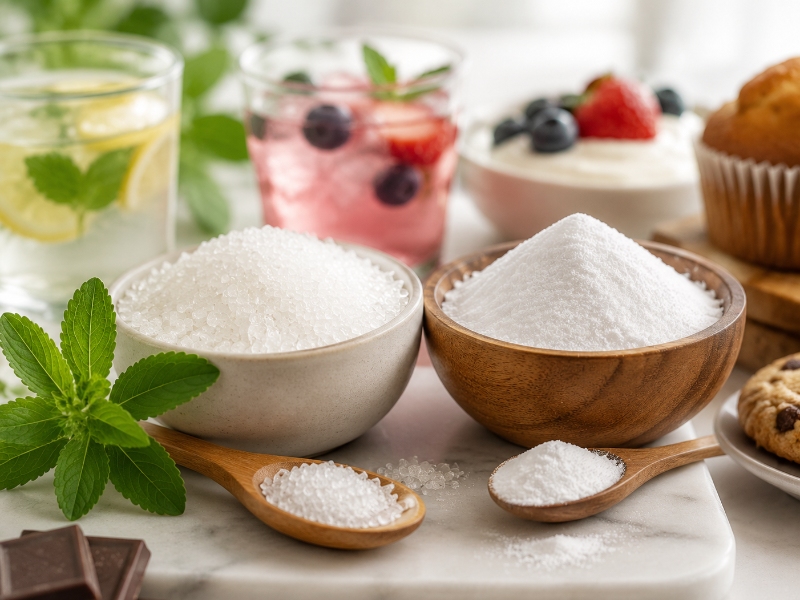
The practical question in a stevia vs erythritol comparison is therefore not simply which sweetener is better. The more useful question is which one better matches the product's sweetness target, mouthfeel, processing method, calorie positioning, and sensory requirements. In many cases, the answer may also involve using the two together rather than choosing only one.
Stevia and erythritol are often discussed together because both are commonly used in reduced-sugar products, but their functional characteristics are very different. Stevia is based on steviol glycosides and delivers intense sweetness at relatively low inclusion levels. Because such a small amount is needed, replacing sugar with stevia removes much of the volume, body, and solids that sucrose previously contributed.
Erythritol is a polyol, or sugar alcohol, with a sweetness level below that of sucrose. It is normally used at a much higher level than stevia and can therefore contribute more bulk and mouthfeel to a formulation. It can be particularly useful when the physical properties of sugar need to be partially replaced as well as its sweetness.
For readers who need a basic introduction to their origin and general characteristics before considering formulation decisions, our existing overview provides additional context on how stevia and erythritol differ.
The most important difference between these food sweeteners is that stevia primarily provides sweetness, while erythritol can provide both sweetness and bulk. This distinction affects dosage, texture, flavor balance, processing behavior, and the need for additional ingredients.
| Comparison Factor | Stevia | Erythritol | Why It Matters |
|---|---|---|---|
| Sweetening Role | High-intensity sweetener | Lower-intensity bulk sweetener | Determines use level and formulation strategy |
| Bulk Contribution | Very limited | Provides physical bulk | Important when replacing sugar solids |
| Taste Consideration | May produce lingering or bitter notes depending on grade and dosage | Generally clean sweetness with a noticeable cooling sensation at higher levels | Affects flavor balancing and sensory testing |
| Typical Strength | Effective at low use levels | Requires higher inclusion levels | Influences formulation cost beyond price per kilogram |
| Common Applications | Beverages, dairy, sauces and concentrated sweetening systems | Bakery, confectionery, powdered products and blended sweetening systems | Application determines which functionality is more valuable |
| Blending Potential | Can increase overall sweetness intensity | Can add body and moderate the overall sweetness profile | Blends can help compensate for the limitations of either ingredient alone |
Stevia is particularly useful when the primary formulation objective is to deliver sweetness without adding significant bulk. This makes it well suited to many liquid products, where replacing the physical volume of sugar may be less important than it is in baked goods or confectionery.
Beverages are one of the clearest examples. Flavored waters, ready-to-drink teas, carbonated drinks, fruit beverages, and other reduced-sugar products may use stevia to achieve substantial sweetness at relatively low inclusion levels. However, reducing sucrose can also change mouthfeel and the timing of sweetness perception, so beverage developers often need to adjust flavors, acids, stabilizers, or other ingredients around the new sweetening system.
The choice of stevia grade can also affect sensory performance. Different steviol glycoside profiles may produce different sweetness characteristics and aftertaste, particularly in relatively simple beverage matrices where off-notes are easier to detect. Our more detailed discussion of stevia in beverage formulation explores these considerations in greater depth.
Erythritol becomes more valuable when a formulation needs more than sweetness alone. Because it is used at a much higher level than a high-intensity sweetener, it can help provide solids and physical presence when part of the sugar is removed.
This characteristic can make erythritol useful in bakery, confectionery, dry mixes, tabletop sweetener systems, and other products where the quantity of sugar affects texture or product structure. It can also be used in beverages, particularly when formulators want to add some body alongside a high-intensity sweetener.
Erythritol does, however, have its own sensory consideration: its dissolution can create a cooling sensation. Whether this effect is desirable, neutral, or distracting depends on the food matrix. It may fit naturally in mint, fruit, or refreshing applications but require more careful balancing in products where a warm, rounded sweetness profile is expected.
The stevia vs erythritol decision does not always need a single winner. In many reduced-sugar formulations, combining food sweeteners can produce a more balanced result than relying on either ingredient alone.
Stevia can provide the sweetness intensity that erythritol cannot achieve efficiently by itself, while erythritol can contribute bulk and mouthfeel that stevia lacks. A blend may also allow formulators to reduce the amount of each ingredient needed to deliver the desired sensory profile.
This approach is particularly relevant in products where removing sucrose changes more than sweetness. Sugar can influence viscosity, body, texture, flavor release, solids content, and overall sensory perception. Successful sugar reduction therefore often requires a complete formulation adjustment rather than a direct one-to-one ingredient substitution.
The finished product should drive sweetener selection. A beverage formulation and a baked product may have the same sugar-reduction target but require very different ingredient systems.
Stevia is usually attractive in beverage applications because its high sweetness intensity allows it to work at low use levels. Erythritol may be incorporated when additional body or a different sweetness profile is needed. Acidity, flavors, preservatives, stabilizers, carbonation, and other beverage ingredients can all change the final sensory result, which is why sweeteners should be evaluated as part of the complete beverage ingredient system.
Bakery formulations present a different challenge because sugar contributes solids and influences texture in addition to sweetness. Stevia alone cannot replace these physical functions. Erythritol can provide some bulk, but formulators may still need to adjust other ingredients to achieve the desired crumb, moisture, browning, or eating quality.
Erythritol can provide useful bulk in sugar-reduced confectionery, while stevia may be added to increase sweetness without greatly increasing total solids. The cooling effect of erythritol and the lingering sweetness of stevia need to be balanced against chocolate, fruit, mint, dairy, or other flavor systems.
Yogurts, nutrition products, fortified foods, and other functional formulations may benefit from either sweetener depending on texture and positioning. In these applications, sweetness needs to work alongside proteins, vitamins, minerals, flavors, and other functional food ingredients without negatively affecting the overall sensory experience.
Instead of selecting between stevia and erythritol based only on ingredient price or sweetness level, food manufacturers can use a more structured evaluation process.
Define the required sugar reduction and target sweetness level.
Identify which functions sugar currently provides beyond sweetness, such as bulk, body, texture, or solids.
Evaluate the food matrix, including pH, moisture, processing temperature, flavor profile, and storage conditions.
Determine whether stevia, erythritol, or a blended sweetener system is more appropriate.
Conduct sensory trials to evaluate sweetness onset, aftertaste, cooling effect, mouthfeel, and overall flavor balance.
Confirm ingredient specifications, regulatory suitability, labeling requirements, and documentation for the target market.
This process also helps prevent a common sourcing mistake: comparing sweeteners only by price per kilogram. Because stevia and erythritol are used at very different inclusion levels and perform different formulation functions, the more meaningful comparison is the cost of achieving the required performance in the finished product.
Once the formulation direction is established, procurement teams should translate application requirements into a clear ingredient specification. For stevia, factors such as steviol glycoside composition, purity, sensory profile, and consistency between batches may be relevant. For erythritol, purity, particle characteristics, solubility requirements, and physical form may affect processing and finished-product performance.
Documentation is equally important when products are manufactured for different markets. Buyers should confirm food-grade specifications, certificates of analysis, traceability information, applicable regulatory documentation, and any additional certification required by the target product or market.
There is no universal answer to the stevia vs erythritol question. Stevia is usually more suitable when high sweetness intensity at a low use level is the priority, while erythritol becomes more useful when a formulation also needs bulk and a sugar-like physical contribution. In many food and beverage products, combining the two can provide more formulation flexibility than choosing either one alone.
The right food sweetener ultimately depends on the finished product, processing conditions, sensory target, and commercial requirements. If you are evaluating natural sweeteners or other ingredients for a new food or beverage formulation, you can discuss your ingredient requirements with TJCY to identify suitable sourcing options.

Tianjin Chengyi International Trading Co., Ltd.
8th floor 5th Building of North America N1 Cultural and Creative Area,No. 95 South Sports Road, Xiaodian District, Taiyuan, Shanxi, China.
+86 351 828 1248 /
Navigation
