Industry Information
Aug. 21, 2026
Modern beverage formulations often depend on more than water, flavor, and a sweetening source. Beverage additives can help manufacturers manage shelf life, sweetness, acidity, appearance, texture, nutritional positioning, and overall product consistency. The exact ingredient system varies significantly between carbonated soft drinks, fruit beverages, ready-to-drink teas, dairy beverages, sports drinks, and functional drinks. Manufacturers developing new formulations can also explore a broader range of food and beverage ingredients when evaluating suitable options.
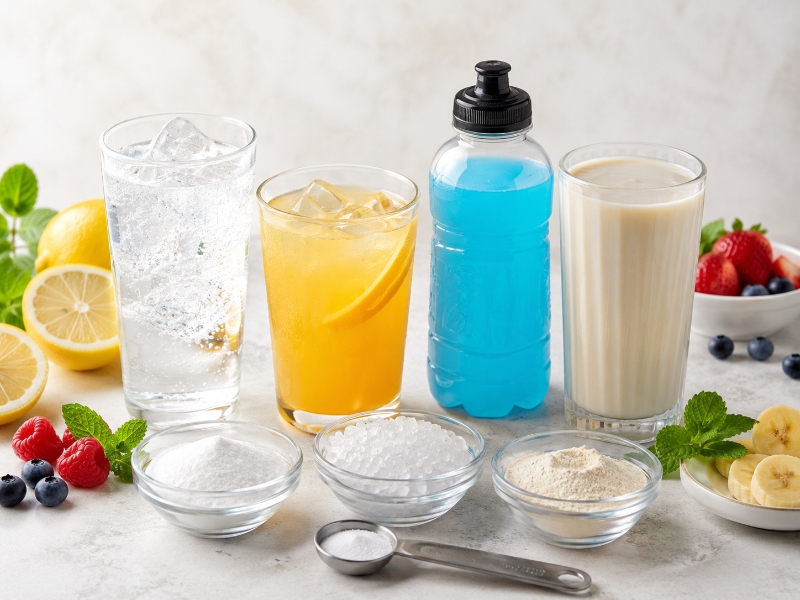
Because each ingredient has a different role, the most useful way to understand additives used in beverages is by the formulation problem they are intended to solve. A preservative addresses a different requirement from a sweetener or stabilizer, while some beverage ingredients work together and influence one another. Selecting them therefore requires looking at the complete beverage system rather than choosing ingredients individually.
Beverages present several formulation challenges. Many contain high levels of water, some must remain stable for long distribution periods, and others combine acids, sweeteners, flavors, vitamins, minerals, proteins, or plant-based ingredients in the same product.
Food additives can help manufacturers control these variables and maintain a more consistent finished beverage. Depending on the formulation, they may be used to control microbial spoilage, adjust sweetness, modify acidity, prevent separation, improve mouthfeel, or add nutritional value.
The specific ingredient system depends on the beverage category and target product. A carbonated soft drink, for example, has different requirements from a protein beverage or fortified juice. A broader introduction to common ingredients used across beverage formulations provides useful background before looking at each functional group in more detail.
Preservation is one of the most common reasons for using beverage additives. Beverages can be vulnerable to yeast, mold, or bacterial spoilage depending on pH, sugar content, processing method, packaging, and storage conditions.
Sodium benzoate is widely associated with acidic beverage systems and is commonly considered for soft drinks, flavored beverages, fruit-based drinks, concentrates, and similar applications. Its performance is closely related to the acidity of the finished beverage, so formulators normally evaluate it together with pH and the complete preservation system.
Preservative selection should therefore not be based only on the ingredient name or intended shelf life. The beverage matrix and processing conditions also matter. Manufacturers working with acidic drinks can examine in more detail how sodium benzoate supports beverage stability under different formulation conditions.
Potassium sorbate is another preservation option commonly considered when mold and yeast control is important. It may be used in certain juice drinks, flavored beverages, syrups, and other products, depending on formulation and applicable regulatory requirements.
In some beverage systems, formulators evaluate sodium benzoate and potassium sorbate individually or as part of a combined preservation approach. Their suitability depends on pH, microbial targets, sensory requirements, and the finished product. A practical comparison of benzoate and sorbate systems in soft drinks can help clarify where their application characteristics differ.
Sweeteners are another major group of beverage ingredients. Their role is no longer limited to making a drink sweeter. In reduced-sugar and low-calorie beverages, sweetener selection can affect sweetness intensity, aftertaste, mouthfeel, flavor perception, and overall consumer experience.
Stevia is a high-intensity sweetener that can provide significant sweetness at relatively low use levels. It is frequently considered for flavored waters, teas, functional beverages, fruit drinks, and other formulations where sugar reduction is an important product objective.
Because removing sucrose can also reduce body and change the way flavors are perceived, stevia usually needs to be evaluated as part of the entire formulation rather than as a direct one-for-one sugar replacement. Different stevia grades and sweetener combinations may also produce different sensory results. Beverage developers can explore these factors further when considering stevia for reduced-sugar drinks.
Erythritol performs differently from high-intensity sweeteners because it can provide both sweetness and some physical bulk. In beverages, it may be used alone in selected formulations or combined with stevia and other sweetening ingredients to create a more balanced sweetness profile.
Blended systems are particularly useful when one sweetener alone cannot deliver the required sweetness curve, mouthfeel, or flavor balance. The choice should ultimately be based on sensory testing in the finished beverage rather than theoretical sweetness alone.
Acidity is an important design variable in many beverages. Acidulants can contribute tartness, balance sweetness, support flavor definition, and create the pH environment required by the complete formulation.
Different beverage styles require different acid profiles. Fruit drinks may need an acidity profile that complements the fruit flavor, while carbonated soft drinks and energy drinks may use acidulants to create a sharper sensory character. Acidity can also interact with preservatives, colors, flavors, and other beverage additives.
For this reason, formulators should not evaluate an acidulant only by its sourness. Solubility, flavor character, compatibility, processing conditions, and its effect on the total formulation all need to be considered.
Not every beverage is expected to have the thin texture of water or a carbonated soft drink. Dairy beverages, plant-based drinks, juice beverages with suspended particles, protein drinks, and nutritional beverages may require ingredients that help maintain a uniform structure.
Hydrocolloids and related stabilizing ingredients can be used to modify viscosity, improve suspension, reduce phase separation, and create the intended mouthfeel. The right system depends on the presence of proteins, minerals, acids, fats, particles, and other components in the beverage.
Because stabilizers can interact with other beverage ingredients, dosage alone does not determine performance. Processing sequence, hydration conditions, temperature, shear, and final pH may all influence the finished product.
Functional beverages increasingly combine traditional beverage additives with ingredients intended to deliver additional nutritional value. Depending on the product concept, this may include vitamins, minerals, amino acids, and other nutritional ingredients.
Sports beverages, fortified drinks, meal-replacement beverages, and wellness-oriented products may all require different nutrient systems. Adding nutritional ingredients can also create new formulation challenges because some vitamins or minerals may influence flavor, appearance, solubility, or stability.
This means functional beverages must balance nutritional targets with sensory and physical stability. Ingredient compatibility becomes especially important when several active components are incorporated into the same formula.
There is no universal combination of beverage additives for every drink. A useful starting point is to identify the main formulation requirements of each beverage category and then build the ingredient system around those needs.
| Beverage Type | Main Formulation Needs | Typical Beverage Ingredients | Key Selection Consideration |
|---|---|---|---|
| Carbonated Soft Drinks | Sweetness, acidity, preservation | Sweeteners, acidulants, preservatives | pH, flavor balance, shelf life |
| Fruit Beverages | Flavor balance, stability, preservation | Acidulants, preservatives, stabilizers, sweeteners | Fruit content, pH, suspended solids |
| Ready-to-Drink Tea | Sweetness, flavor stability, preservation | Sweeteners, acid regulators, preservatives | Flavor profile and storage stability |
| Dairy or Plant-Based Drinks | Texture and physical stability | Hydrocolloids, emulsifiers, minerals, vitamins | Protein stability and phase separation |
| Sports and Functional Drinks | Nutrition, flavor, sweetness, stability | Vitamins, minerals, amino acids, sweeteners, acidulants | Nutrient compatibility and sensory balance |
The most effective additives used in beverages are those selected as part of a coordinated formulation. Preservatives help manage shelf life, sweeteners establish the desired sweetness profile, acidulants shape flavor and pH, stabilizers control physical properties, and nutritional ingredients support functional positioning.
For ingredient buyers, this also means comparing more than specifications and unit prices. Consistent quality, food-grade documentation, batch-to-batch stability, packaging, supply reliability, and suitability for the intended beverage process can all affect commercial production.
Beverage additives serve different functions across modern drink formulations, from preservation and sweetness control to acidity adjustment, texture management, and nutritional enhancement. The appropriate combination depends on the beverage category, processing method, storage conditions, sensory target, and market requirements.
Rather than treating beverage ingredients as isolated components, manufacturers can achieve more consistent results by evaluating how preservatives, sweeteners, acidulants, stabilizers, and nutritional ingredients work together in the finished product. Companies developing new drinks or reviewing existing formulations can discuss ingredient requirements with TJCY when evaluating suitable sourcing options.

Tianjin Chengyi International Trading Co., Ltd.
8th floor 5th Building of North America N1 Cultural and Creative Area,No. 95 South Sports Road, Xiaodian District, Taiyuan, Shanxi, China.
+86 351 828 1248 /
Navigation
