
Both dimethicone and cyclopentasiloxane are widely used in hair care products, especially conditioners, leave-in treatments, hair masks, styling creams, and anti-frizz products. However, they do not play the same role. Dimethicone is mainly valued for long-lasting conditioning, lubricity, shine, and frizz control, while cyclopentasiloxane is often used as a lightweight, fast-spreading volatile silicone that improves application feel and helps distribute other oil-soluble ingredients.
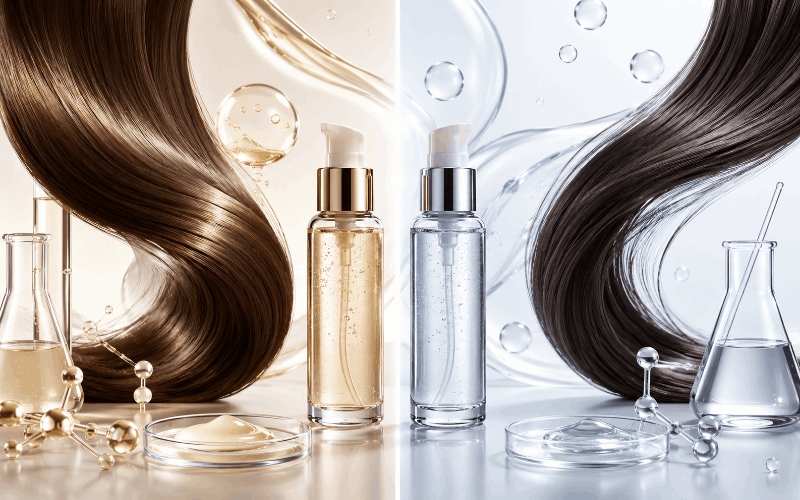
Why Silicones Are Still Important in Hair Care Formulations
Modern consumers expect hair care products to deliver visible and touchable results. A conditioner should make hair easier to comb, reduce roughness, improve shine, control frizz, and leave the hair feeling smooth without being overly greasy or heavy. This is why silicones remain important in many hair care systems.
In conditioner and treatment formulations, silicones help form a thin lubricating layer on the hair surface. This can reduce friction between hair fibers, improve wet and dry combing, and create a smoother after-feel. In damaged hair, where the cuticle surface is rougher and more uneven, silicone ingredients can help improve manageability and visual gloss.
However, different silicones deliver different effects. A high-viscosity dimethicone may provide stronger coating and conditioning, while a volatile silicone such as cyclopentasiloxane may create a lighter sensory profile and faster spreadability. This is why the comparison of cyclopentasiloxane vs dimethicone is important in real product development.
The same selection logic also applies to broader personal care systems. When a formula needs softness, slip, or a more elegant after-feel, the silicone phase is often evaluated together with emollients, surfactants, emulsifiers, and other functional ingredients.
Dimethicone vs Cyclopentasiloxane: Key Differences
The difference between dimethicone and cyclopentasiloxane is mainly related to volatility, sensory feel, conditioning strength, and formulation purpose. The table below summarizes the practical selection logic for hair care manufacturers.
| Comparison Point | Dimethicone | Cyclopentasiloxane | Formulation Meaning |
|---|---|---|---|
| Main function | Conditioning, smoothing, shine, frizz control | Spreadability, lightweight feel, volatile carrier effect | Dimethicone is stronger for lasting conditioning; cyclopentasiloxane is stronger for sensory elegance. |
| Volatility | Non-volatile | Volatile | Dimethicone remains on hair longer, while cyclopentasiloxane gradually evaporates. |
| Hair feel | Smooth, coated, soft, sometimes richer | Silky, light, dry, fast-spreading | Choose based on whether the product should feel nourishing or lightweight. |
| Best use | Conditioners, masks, repair creams, anti-frizz products | Serums, leave-in sprays, lightweight styling products | The product format strongly affects the best silicone choice. |
| Performance focus | Longer-lasting manageability | Improved application experience | Many formulas use both for balanced performance. |
| Selection concern | Viscosity, emulsification, build-up perception | Regulatory review, volatility, formulation balance | Both require supplier documentation and formula testing. |
Which Silicone Is Better for Hair Conditioner Ingredients?
For traditional rinse-off conditioners, dimethicone is often the more direct choice when the goal is stronger conditioning. It can improve combing, reduce friction, and support a smoother hair surface after rinsing. This makes it suitable for products positioned for dry, damaged, frizzy, colored, or chemically treated hair.
In a rinse-off conditioner, the formula usually contains cationic surfactants or conditioning agents, fatty alcohols, emulsifiers, and other supporting hair conditioner ingredients. These ingredients need to work as a complete system. For example, the cleansing base, foam profile, and conditioning balance are often considered together in shampoo and conditioner lines, especially when developing formulas around surfactant selection.
Cyclopentasiloxane can also be used in conditioner-related products, but it is more commonly valued in leave-in and styling formats. It helps the product spread more easily through the hair and reduces the initial greasy sensation. For lightweight conditioners, hair serums, or smoothing products, cyclopentasiloxane may help create a cleaner and more elegant sensory profile.
Therefore, in the debate of cyclopentasiloxane vs dimethicone, dimethicone is usually better for durable conditioning, while cyclopentasiloxane is better for lightweight application and sensory improvement. For many premium hair care products, the best answer is not one or the other, but a controlled blend of both.
Can Dimethicone and Cyclopentasiloxane Be Used Together?
Yes. In many hair care formulations, dimethicone and cyclopentasiloxane can complement each other. Cyclopentasiloxane improves initial spread and lightness, while dimethicone contributes lasting smoothness and conditioning.
This combination is common in hair serums, leave-in conditioners, anti-frizz products, and smoothing creams. The volatile silicone helps distribute the non-volatile silicone more evenly, creating a more elegant application experience. After cyclopentasiloxane evaporates, dimethicone can remain on the hair surface to provide softness and shine.
This is one reason why cyclopentasiloxane vs dimethicone should not always be treated as a strict replacement decision. In practice, the two ingredients may be used together when the formula requires both lightweight feel and durable conditioning.
Formulation Factors That Affect Silicone Performance
Choosing the right silicone is only one part of formulation development. The final result also depends on the complete ingredient system, processing method, and product format.
1. Hair type and target claim
Fine hair usually requires a lighter silicone system to avoid a heavy feel. Thick, curly, dry, or damaged hair can often tolerate richer conditioning ingredients. A product for frizz control may need stronger deposition, while a lightweight daily conditioner may need a cleaner finish.
2. Rinse-off or leave-in format
Rinse-off conditioners often prioritize deposition and combing improvement. Leave-in products place more emphasis on spreadability, residue level, and after-feel. This is why dimethicone may be more important in rinse-off conditioners, while cyclopentasiloxane is often attractive in leave-in systems.
3. Emulsification and stability
Silicone ingredients need to be properly incorporated into the formula. Poor emulsification can affect product stability, appearance, and performance. For creams, conditioners, and lotions, the emulsifier system should be chosen according to oil phase structure, processing temperature, viscosity target, and long-term stability. This is especially important in formulas where cream stability is a core requirement.
4. Interaction with surfactants and conditioners
Hair care systems often include surfactants, cationic conditioning agents, fatty alcohols, and polymers. These materials can influence silicone dispersion and deposition. In shampoo formulas, the cleansing system also affects how smooth or dry the hair feels after washing. This is why foam quality and mildness are often evaluated together with SLES performance in daily-use hair care products.
5. Market and regulatory requirements
Regulatory expectations for silicone ingredients may vary by product type and target market. Cyclopentasiloxane, in particular, should be reviewed carefully when developing products for regions with stricter environmental or cosmetic ingredient requirements. Manufacturers should confirm local compliance, concentration limits, supplier documentation, and finished product claims before commercial launch.
For manufacturers comparing silicone ingredients at commercial scale, supplier capability is part of the selection process. TJCY supports personal care, cosmetic, pharmaceutical, food, and industrial raw material supply, which allows procurement teams to evaluate silicone ingredients together with other formula components.
FAQ
Is dimethicone better than cyclopentasiloxane for conditioners?
Dimethicone is often better for traditional rinse-off conditioners when the goal is durable conditioning, smoother combing, and frizz control. Cyclopentasiloxane is better when the product needs a lighter and faster-spreading feel.
Can cyclopentasiloxane replace dimethicone?
Not always. Cyclopentasiloxane is volatile and mainly improves sensory feel and spreadability. Dimethicone provides more lasting conditioning. In many hair care products, they are blended rather than used as direct replacements.
Is cyclopentasiloxane suitable for leave-in hair products?
Yes, cyclopentasiloxane is commonly used in leave-in products, hair serums, and styling products because it gives a light, silky, non-greasy application feel. However, market-specific regulatory requirements should always be checked.
Does dimethicone make hair heavy?
Dimethicone can feel heavy if the viscosity grade or dosage is not suitable for the target hair type. Fine hair usually needs lighter silicone systems, while dry or damaged hair may benefit from richer conditioning.
What are the most important hair conditioner ingredients besides silicones?
Common hair conditioner ingredients include cationic conditioning agents, fatty alcohols, emulsifiers, humectants, preservatives, fragrance, pH adjusters, and sometimes proteins or botanical extracts. Silicones are usually part of a broader conditioning system rather than the only active material.
