Industry Information
Home > News > Industry Information > Improving Bioavailability of Poorly Soluble Antibiotics with Pharmaceutical Excipients
May. 18, 2026
Many antibiotic APIs with strong clinical efficacy present formulation challenges because of their limited aqueous solubility. For pharmaceutical manufacturers, improving the bioavailability of poorly soluble antibiotics is essential to ensure consistent therapeutic performance, faster onset of action, and predictable absorption.
Macrolide antibiotics such as azithromycin, clarithromycin, and erythromycin are representative examples of poorly soluble antibiotics. As discussed in our article How Azithromycin API Is Used in Respiratory Infection Treatment, azithromycin offers broad-spectrum antibacterial activity but exhibits relatively low water solubility. Without suitable pharmaceutical excipients, the API may dissolve slowly, resulting in lower and more variable absorption.
The most effective way to improve the bioavailability of poorly soluble antibiotics is to combine a high-quality API with pharmaceutical excipients such as solubilizers, surfactants, wetting agents, and stabilizers. These materials increase apparent solubility, accelerate dissolution, and help maintain consistent drug absorption.
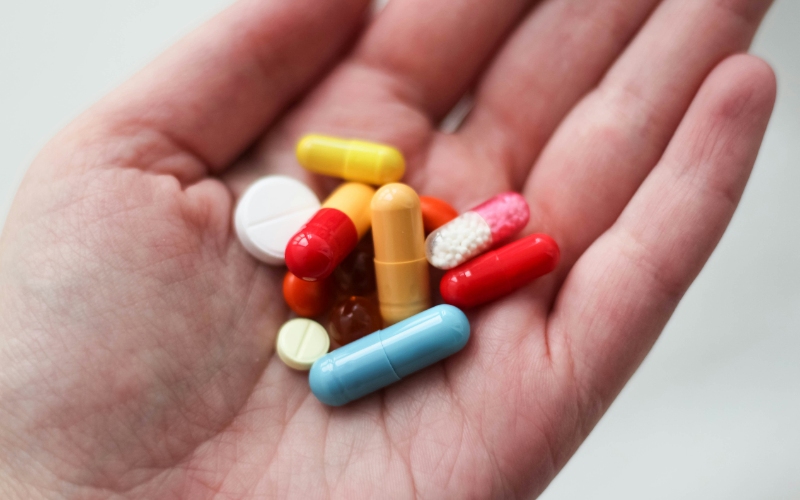
Bioavailability refers to the proportion of an orally administered drug that reaches systemic circulation in an active form. For antibiotics, this parameter directly affects how quickly therapeutic concentrations are achieved and how reliably bacterial infections are treated.
Low bioavailability can lead to:
Reduced antimicrobial efficacy
Slower onset of action
Higher dosing requirements
Greater variability among patients
Increased risk of antibiotic resistance
A significant number of antibiotic molecules contain hydrophobic functional groups and complex crystal structures that limit interaction with gastrointestinal fluids. According to the Biopharmaceutics Classification System (BCS), many antibiotics are classified as Class II compounds, where low solubility is the main factor restricting absorption.
In addition to azithromycin, other antibiotics such as clarithromycin and erythromycin often require formulation support to improve dissolution and oral bioavailability.
The functional role of excipients extends far beyond acting as inactive fillers. Pharmaceutical excipients are critical components that can significantly enhance the performance of difficult-to-formulate APIs.
Bioavailability enhancement excipients work through several mechanisms:
Increasing particle wetting
Reducing surface tension
Improving apparent solubility
Preventing precipitation after dissolution
Maintaining supersaturation during absorption
A solubilizer is one of the most important pharmaceutical excipients for improving the performance of poorly soluble antibiotics. Solubilizers help disperse hydrophobic molecules and increase their apparent solubility in gastrointestinal fluids.
Common solubilizer approaches include:
Cyclodextrin inclusion complexes
Polymeric solubilizers
Co-solvent systems
Amorphous solid dispersions
Solubilizer pharma technologies are widely used when formulators need to improve the absorption of challenging APIs without changing the active molecule itself.
Surfactants are pharmaceutical excipients that lower interfacial tension between API particles and aqueous media. By improving wetting and dispersion, surfactants accelerate dissolution and support more complete absorption.
Common surfactants used in pharmaceutical formulations include:
Polysorbates
Sodium lauryl sulfate
Poloxamers
Lecithin-based systems
When surfactants are combined with solubilizers, they often create synergistic effects that substantially improve antibiotic bioavailability.
| Formulation Challenge | Recommended Pharmaceutical Excipients | Primary Function |
|---|---|---|
| Low aqueous solubility | Solubilizer | Increase apparent solubility |
| Poor wetting | Surfactant | Reduce surface tension |
| Slow dissolution | Wetting agent | Accelerate dissolution |
| Precipitation after dissolution | Polymeric stabilizer | Maintain supersaturation |
When selecting pharmaceutical excipients for antibiotic formulations, formulators should consider API crystal form, particle size, target dosage form, dissolution requirements, chemical compatibility, regulatory acceptance, and supply reliability.
Many of the same procurement principles used for APIs also apply to excipients. Our guide to evaluating API suppliers explains how to assess quality systems, documentation, and manufacturing consistency, while our article on verifying FDA compliance outlines practical steps for regulatory due diligence.
Solubilizers, surfactants, wetting agents, and polymeric stabilizers are commonly used to improve solubility and bioavailability.
Azithromycin has limited aqueous solubility, which can reduce dissolution and lead to inconsistent absorption without appropriate excipients.
Surfactants improve particle wetting, reduce surface tension, and accelerate dissolution of hydrophobic APIs.
TJCY and TJCY Pharma provide global sourcing support for pharmaceutical APIs and formulation ingredients used in drug manufacturing.

Tianjin Chengyi International Trading Co., Ltd.
8th floor 5th Building of North America N1 Cultural and Creative Area,No. 95 South Sports Road, Xiaodian District, Taiyuan, Shanxi, China.
+86 351 828 1248 /
Navigation
